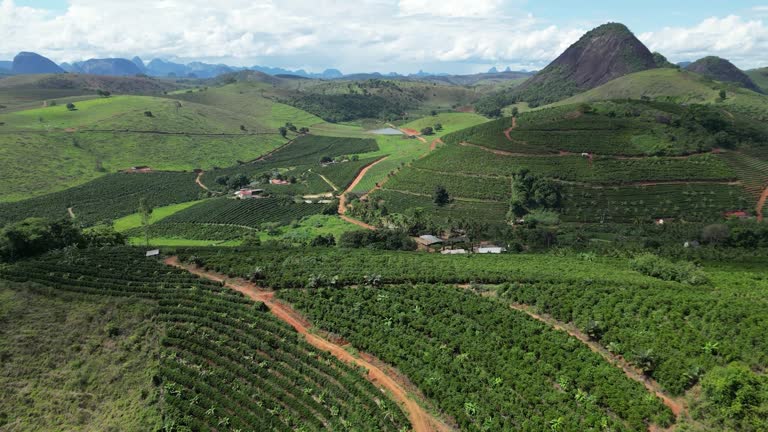
Laos is an important but relatively small coffee-producing country in Southeast Asia, with most of its coffee grown on the Bolaven Plateau in southern Laos, particularly in the provinces of Champasak, Salavan, Sekong, and Attapeu. This region has high altitudes ranging from about 1,000 to 1,350 meters above sea level, fertile volcanic soil, and a cool, wet climate, all of which are ideal for coffee cultivation. Coffee is one of Laos’s most valuable agricultural exports and provides income for tens of thousands of smallholder farmers, who usually grow coffee on farms of one to three hectares. Around 80–85 percent of Lao coffee production is Robusta, which is known for its strong flavor and high caffeine content, while the remaining 15–20 percent is Arabica, including varieties such as Typica, Bourbon, and Catimor, which are increasingly sought after in specialty coffee markets. Coffee in Laos is often shade-grown and many farmers use traditional, environmentally friendly or organic farming methods. Most of the country’s coffee is exported to Thailand, Vietnam, Europe, and Japan, where demand for single-origin and sustainably produced coffee is growing. Although the sector faces challenges such as limited processing facilities, fluctuating prices, and the effects of climate change, Laos has strong potential to expand its coffee industry and improve quality through better processing, farmer training, and access to international specialty markets.