Harrar (Harar) is one of Ethiopia’s oldest and most legendary coffee-producing regions, located in the eastern highlands of Ethiopia around the historic city of Harar. Coffee is grown in the surrounding semi-arid highlands at elevations of approximately 1,400 to 2,000 meters above sea level, where hot days, cool nights, limited but seasonal rainfall, and rocky, well-drained soils create a markedly different growing environment from Ethiopia’s lush southern and western regions. Harrar is historically significant not only as a coffee origin but also as a major trading hub that connected Ethiopian coffee to Arabia, the Middle East, and Europe for centuries.
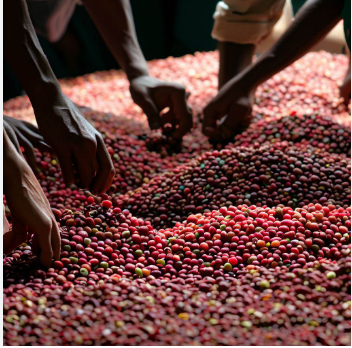
Coffee production in Harrar is carried out almost entirely by smallholder farmers, who grow coffee in dryland garden systems alongside crops such as sorghum, maize, and khat. Farming is traditional and low-input, with minimal use of fertilizers or chemicals. The coffee consists mainly of Ethiopian heirloom Arabica varieties, including ancient local landraces adapted to drought-prone conditions. Due to the region’s dry climate and limited access to water, coffee from Harrar is almost exclusively naturally processed (sun-dried), a method that has defined the region’s identity and flavor profile for generations.
Harrar coffees are world-famous for their intense, winey, and fruit-forward character. In the cup, they typically display medium to full body, low to moderate acidity, and distinctive flavors of blueberry, blackberry, dried fruit, dark chocolate, leather, and spice, often with a wild, rustic edge. This bold and exotic profile has made Harrar coffee especially prized for espresso, traditional coffee preparation, and specialty blends seeking depth and character. Historically, Harrar was one of the first African coffees to gain international recognition, and its flavor profile helped shape early European and Middle Eastern perceptions of Ethiopian coffee.
Despite its iconic status, Harrar coffee faces ongoing challenges, including climate variability, water scarcity, inconsistent quality, and traceability issues within long supply chains. Nevertheless, renewed interest in single-origin natural coffees, improved sorting and drying techniques, and stronger geographic identification have helped reassert Harrar’s place in the specialty market. Today, Harrar remains a symbol of Ethiopia’s ancient coffee heritage—an origin defined by history, tradition, and a distinctive cup profile that stands apart from any other coffee-growing region in the world.