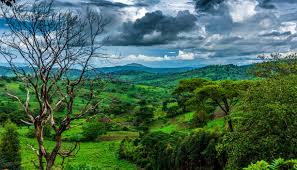
New Georgia, part of the Western Province group of the Solomon Islands, is a large, mountainous island known for its lush forests, river valleys, and scattered highland communities. Coffee cultivation on New Georgia is relatively small-scale and predominantly Arabica, grown mainly in upland areas between 400 and 900 meters above sea level. The island’s interior hills and valleys provide cooler temperatures, fertile volcanic soils, and adequate rainfall, which support coffee alongside subsistence crops such as taro, cassava, bananas, and sweet potatoes.
Farming on New Georgia is almost entirely smallholder-based, with family plots intercropped under shade trees to protect coffee plants from direct sun. Management is low-input and labor-intensive: villagers perform pruning, weeding, selective hand-picking, and basic processing with minimal mechanization. Processing methods vary depending on water availability—washed or semi-washed systems are common in accessible villages, while in more remote areas, cherries may be sun-dried naturally on mats or tarpaulins.
Coffee from New Georgia generally exhibits mild acidity, light to medium body, and subtle flavor notes, often with hints of nuts, chocolate, and soft fruit. Because production is fragmented across remote villages, cup quality can be inconsistent, but higher-elevation lots often show good potential for small-lot specialty coffee.
Challenges include steep terrain, limited road and transport infrastructure, lack of access to modern processing facilities, and competition from other crops such as cocoa and copra. Despite these obstacles, coffee remains an important source of cash income for inland households. With improved cooperative organization, farmer training, and post-harvest support, New Georgia has potential to increase both the quality and market reach of its Arabica coffee production.