
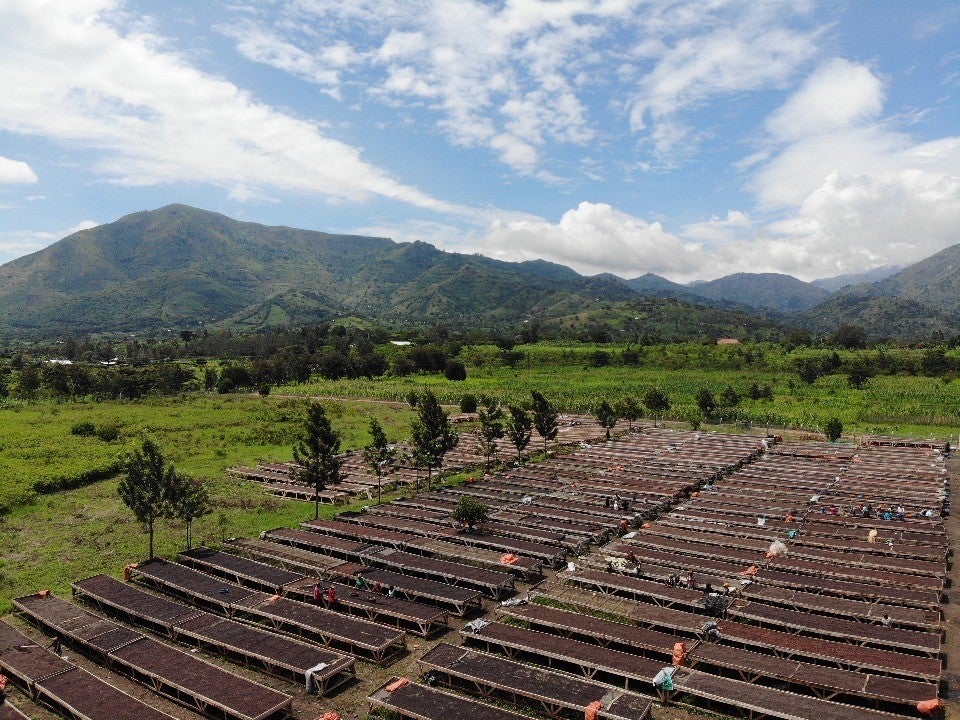
Busoga is one of Uganda’s most important coffee-producing regions, located in eastern Uganda between Lake Victoria to the south and Mount Elgon to the east, with Jinja, Iganga, Kamuli, and Mayuge among its key coffee-growing districts. The region lies at relatively low to mid elevations (1,100–1,400 meters above sea level) and experiences warm temperatures, reliable rainfall, and fertile alluvial and lateritic soils. These conditions are especially well suited to Robusta coffee, which has become the backbone of Busoga’s rural economy and a major contributor to Uganda’s position as Africa’s largest coffee exporter.
Coffee production in Busoga is overwhelmingly driven by smallholder farmers, most of whom cultivate coffee on small plots alongside food crops such as bananas, cassava, maize, and beans. Farming systems are typically low-input, relying on family labor and traditional practices, with coffee serving as the primary source of cash income for many households. The dominant crop is Robusta (Coffea canephora), including traditional local selections and improved clonal varieties developed for higher yields and disease resistance. Harvesting is done by hand, often with multiple pickings during the season, reflecting the region’s extended harvest cycle.
Busoga Robusta is best known for its strong body, high caffeine content, and earthy, chocolaty flavor profile. In the cup, it commonly shows low acidity, heavy mouthfeel, and notes of dark chocolate, nuts, malt, wood, and mild spice. Historically, much of Busoga’s coffee was used in commercial blends and instant coffee production. However, in recent years, improved agronomy, better post-harvest handling, and increased attention to quality have led to the emergence of specialty and fine Robusta lots, some displaying cleaner profiles, subtle sweetness, and enhanced balance suitable for single-origin Robusta offerings.
Despite its importance, the Busoga coffee sector faces challenges such as price volatility, climate pressure, pests and diseases, and limited access to finance and modern processing facilities. Nonetheless, the region holds significant potential. Investments in clonal replanting programs, farmer training, centralized wet mills, and traceability initiatives are helping to raise quality and productivity. As global interest grows in high-quality Robusta and sustainable coffee supply chains, Busoga is increasingly recognized not just as a volume producer, but as a key region shaping the future reputation of Ugandan Robusta on the world coffee stage.