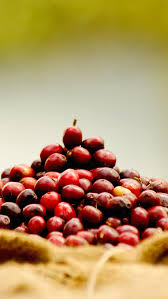
Agboville, located in the southeastern part of Côte d’Ivoire near the Ébrié Lagoon and not far from the economic hub of Abidjan, is one of the country’s notable coffee-producing areas. The region benefits from fertile tropical soils, moderate rainfall, and a warm climate, making it suitable for the cultivation of Robusta coffee, which is the predominant variety grown in Côte d’Ivoire.
Coffee farming in Agboville is mainly conducted by smallholder farmers, who often intercrop Robusta with cocoa, bananas, and staple food crops. This mixed-farming system enhances soil fertility, provides shade, and ensures diversified income streams for local communities. The majority of coffee is harvested by hand and sun-dried, following traditional post-harvest practices that preserve the bold, earthy characteristics typical of Ivorian Robusta.
Agboville also benefits from its proximity to major export routes, including Abidjan’s port, which allows farmers and cooperatives to efficiently transport their coffee to local processing facilities and international markets. The region plays a supporting role in Côte d’Ivoire’s national coffee sector, contributing to both domestic consumption and exports.
Robusta from Agboville is known for its full body, earthy and woody aroma, and bitter-sweet flavor, making it a reliable choice for commercial blends, soluble coffee, and espresso production. While the area does not produce the higher-altitude Arabica found in the western highlands, ongoing initiatives are focusing on improving yields, post-harvest handling, and sustainable farming practices to maintain quality and productivity.
Overall, Agboville is an important part of Côte d’Ivoire’s coffee landscape, representing the productive lowland Robusta belt that sustains both the livelihoods of smallholder farmers and the country’s position as one of Africa’s leading Robusta exporters.