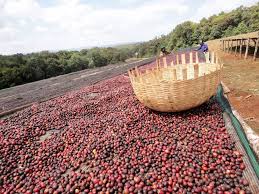
Danané, located in the far western part of Côte d’Ivoire near the borders of Liberia and Guinea, is one of the country’s recognized coffee-producing zones. The region benefits from humid tropical conditions, fertile soils, and forested landscapes, which support smallholder farming systems where coffee is intercropped with cocoa, food crops, or shade trees. Although Côte d’Ivoire is overwhelmingly a Robusta-producing nation, the coffee from Danané contributes to the country’s long-standing role as one of Africa’s key Robusta exporters.
Companies such as Africa Sourcing and other local exporters are active in the region, working directly with producers to collect, process, and export Robusta beans. Most coffee in Danané is sun-dried and handled through traditional post-harvest methods, giving it the characteristic bold, earthy, and woody profile that Ivorian Robusta is known for.
Historically, Côte d’Ivoire was the world’s third-largest coffee producer during the 1970s and 1980s. Although national production has declined due to aging trees, price fluctuations, and political instability, Danané remains involved in efforts to revitalize the sector. These initiatives include:
Partnerships between exporters, cooperatives, and international buyers
Farmer training programs focused on pruning, replanting, and improved processing
Sustainable development projects aimed at rehabilitating old plantations and improving yields
Support for rural infrastructure, such as wet mills and drying stations
Many of these efforts are designed to restore Côte d’Ivoire’s production capacity and improve the quality of Robusta coming from regions like Danané.
Today, Danané continues to play a meaningful role in the country’s coffee value chain, representing both the challenges and the potential of Côte d’Ivoire’s ongoing coffee sector revival.