Loading

All sector
Buyer
Supplier
Bench Maji

All Categories
-
Coffee Farming & Origins
- Africa
- Asia
- Oceania
- America
- Coffee Brands & Products
- Machinery & Equipment
- Accessories & Supplies
Bench Maji
Bench Maji, situated in the far southwest of Ethiopia near the borders with South Sudan, is one of the country’s most ecologically rich and culturally significant coffee regions.
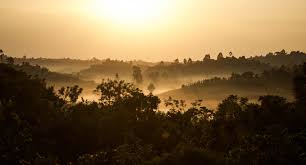
Bench Maji
Bench Maji, situated in the far southwest of Ethiopia near the borders with South Sudan, is one of the country’s most ecologically rich and culturally significant coffee regions. The area forms part of Ethiopia’s “wild coffee corridor,” where Arabica grows naturally in dense, humid forests. Elevations typically span from 1,400 to over 2,100 meters above sea level, creating a high-altitude environment that slows the growth and ripening of coffee cherries. This slow maturation, combined with the region’s exceptionally high annual rainfall—often between 1,800 and 2,400 millimetres—produces cherries with dense seeds, complex sugars, and extraordinary aromatic development. The climate is cool and misty, with thick forest canopies providing natural shade that maintains soil moisture and protects coffee trees from heat stress. Coffee production in Bench Maji is dominated by smallholder farmers, many of whom practice traditional agro forestry. Instead of clearing forests for cultivation, they selectively manage undergrowth and integrate coffee into diverse natural ecosystems filled with fruit trees, spices, medicinal plants, and native shade species. Much of the coffee is semi-wild: farmers tend to naturally occurring Arabica trees, prune selectively, and harvest cherries from landscapes that remain largely forested. This traditional system preserves biodiversity and helps maintain the genetic richness of Ethiopia’s indigenous coffee varieties. Bench Maji is also historically important as the birthplace of the world-famous Gesha (Geisha) coffee variety. The original Gesha trees were collected from this region’s forests in the 1930s and their genetic descendants—rediscovered and cultivated decade’s later—sparked global demand for this highly aromatic variety. Processing methods in Bench Maji vary depending on proximity to towns and infrastructure. In remote forested areas, natural (sun-dried) processing dominates, with cherries spread on raised beds under filtered forest sunlight. These naturals tend to exhibit intense fruit flavours and heavy sweetness. Around more accessible areas like Mizan Teferi, Sheko, and Guraferda, washed processing has been expanding as new wet mills are established. Washed coffees from the region often highlight clean floridity, citric brightness, and refined sweetness. Improving processing standards in recent years has allowed Bench Maji producers to compete more consistently in the specialty market, with some micro lots—especially Gesha-grown ones—fetching premium prices internationally. The flavour profile of Bench Maji coffees is among the most complex in Ethiopia. They are known for their vividly floral aromatics—jasmine, honeysuckle, bergamot—and layers of fruit ranging from blueberry, raspberry, and stone fruit to tropical notes like mango and papaya. The best cups display a silky or velvety mouth feel and a lively yet balanced acidity. Gesha coffees from the region stand out even further, offering delicate and tea-like structures with flavours of lemongrass, peach, sweet citrus and vibrant floral. Because many trees grow under diverse natural forests, subtle terroir expressions vary from one micro-area to another, adding further nuance to the region’s reputation. Harvesting in Bench Maji typically begins around October at lower altitudes and continues through January or even February in the higher, cooler zones. Picking is labour-intensive because cherries ripen slowly and unevenly in shaded forests, requiring multiple passes through the same trees. Despite these challenges, this method preserves quality, and many farmers use traditional techniques passed down through generations. Today, Bench Maji stands out as a region in which Ethiopia’s coffee heritage is preserved in living form. Its combination of wild genetic diversity, forest-based production, high altitudes, and improved post-harvest practices has positioned it as a rising source of exceptional specialty coffees. As interest grows in traceable, ecologically sustainable, and rare varieties, Bench Maji continues to gain international recognition for both its cultural importance and its spectacular cup quality.
0 Products found
Loading
You have 4 new notification
Category
-
Coffee Farming & Origins
- Africa
- Asia
- Oceania
- America
- Coffee Brands & Products
- Machinery & Equipment
- Accessories & Supplies
Notification