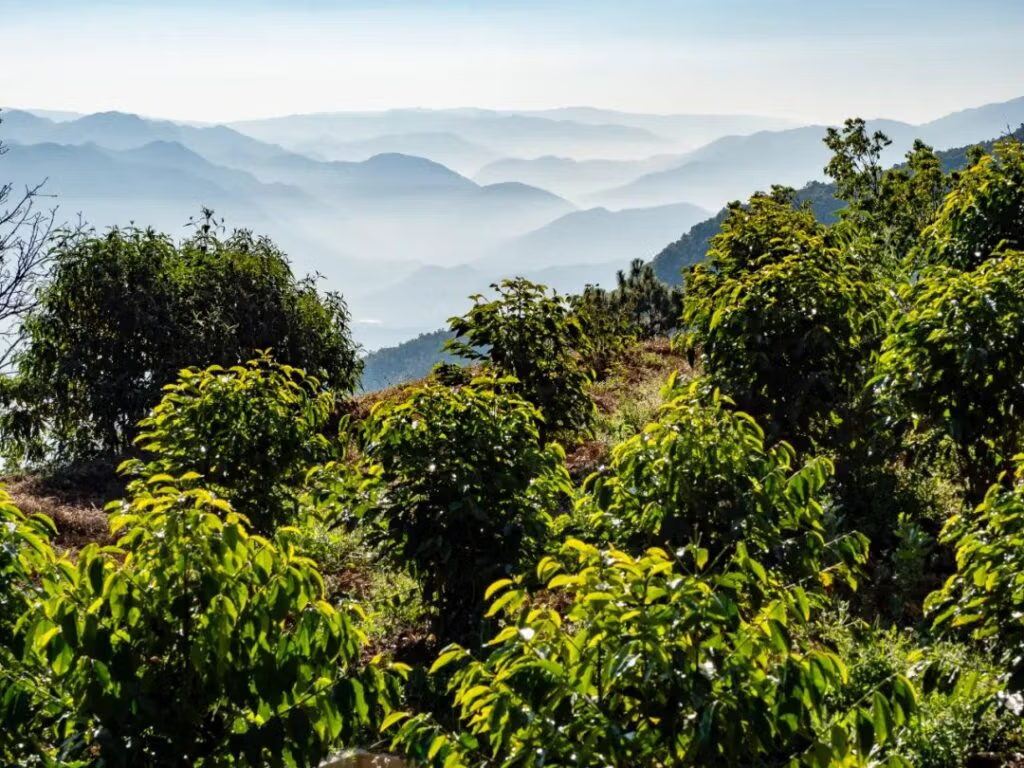
- Yunnan Province dominates China’s coffee landscape. The main regions within Yunnan for coffee production are Baoshan, Dehong, and Menglian in Pu’er. Pu’er alone accounts for 60% of the country’s total production. This southwestern province borders Vietnam, Myanmar, and Laos, creating a unique cultural confluence that influences local coffee traditions.
The province’s high-altitude terrain and subtropical climate create ideal growing conditions. The high altitudes and subtropical climate of Yunnan are ideal for growing high-quality beans. Elevations ranging from 1,000 to 2,000 meters provide the temperature variations necessary for developing complex flavor profiles.
- Yunnan primarily grows arabica coffee, specifically Catimor varieties. Catimor (a Caturra-Timor hybrid) as the varietal of choice. This hybrid combines disease resistance with quality potential, making it suitable for the region’s growing conditions.
The province’s coffee exhibits distinctive characteristics. Yunnan beans typically display medium body with chocolate and nutty undertones. The high-altitude growing conditions contribute to bright acidity and complex flavor development. Some plantations now experiment with specialty varieties like Typica and Bourbon, creating new tasting experiences for visitors.
Yunnan Province (云南) – China’s main coffee region
- Produces ~95% of China’s coffee.
- Grows mostly Arabica (Catimor, Bourbon, Typica).
- Major growing areas:
- Pu’er (普洱) – the largest and most famous coffee hub
- Baoshan (保山) – known for higher-altitude farms and specialty coffee
- Dehong (德宏) – fertile valleys near the Myanmar border
- Lincang (临沧) and Xishuangbanna (西双版纳).
- Yunnan’s altitude (1,000–1,800m), mild climate, and rich soil make it ideal for high-quality Arabica.