
The Guji region of southern Ethiopia, situated at elevations ranging from 1,600 to 2,018 meters above sea level, has emerged as one of the country’s most distinctive coffee-growing areas. Over the past six decades, a combination of commercial expansion and cultural recognition has elevated Guji coffee to international prominence, transforming it from a relatively obscure origin into a globally sought-after specialty coffee region. The high-altitude terrain, coupled with fertile volcanic soils and a favorable climate of moderate temperatures and well-distributed rainfall, provides ideal conditions for cultivating Arabica coffee with exceptional quality and consistency.
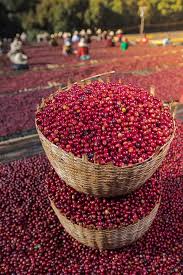
Guji coffees are celebrated for their balanced and complex cup profiles, offering both clarity and depth. The region produces beans that are highly versatile, performing well in a variety of brewing methods, from filter coffee to espresso, making them a favorite among specialty roasters and coffee enthusiasts. Flavor characteristics often include bright, vibrant acidity, complemented by sweet, fruity, and floral notes, as well as subtle hints of spice or cocoa, resulting in a cup that is both dynamic and approachable.
The development of Guji as a coffee region reflects not only favorable environmental conditions but also the commitment of local farmers and cooperatives to quality and sustainable production practices. Over the decades, the region has built a reputation for meticulous harvesting and processing, including selective hand-picking and careful wet or dry processing methods that preserve the distinct terroir.
Today, Guji coffee is a symbol of Ethiopia’s specialty coffee excellence, admired for its nuanced flavors, versatility, and high-quality standards. Its emergence over the last sixty years demonstrates the impact of both cultural heritage and modern commercial practices in shaping a coffee region that continues to captivate global markets.